Once the temperatures in Houston begin getting into the hundreds, the risk for heat-related illness elevates. The CDC reports that 300 heat-related deaths occurred in the United States in 2001. While heat illnesses are most commonly reported by the young, the elderly and the obese, it can affect anyone. People who are taking antihistamines, anti-psychotic drugs, illegal drugs, alcholics, or individuals with compromised immune systems must also really watch out.
The earliest signs of heat-related illness involve clammy, moist skin, flushed complexion and muscle cramping. A mild fever of 102 degrees is typical. Removing excess clothing, stretching, getting out of the heat, and drinking water or Gatorade can usually help at this point.
By the time heat exhaustion sets in, a person’s face has gone from red to pale. Headache, fatigue, dizziness, weakness, anxiety and nausea usually occur too. Vomiting, diarrhea and fainting spells are other possible symptoms.
The signs of a heat stroke include: a fever over 104 degrees, rapid heart rate, loss of appetite, vomiting, headache, fatigue, confusion, lethargy, and stupor. Seizures, a coma, or even death may occur if the symptoms are not treated by a medical professional at once.
Your best course of action is to keep an eye on the weather forecast and avoid those extremely hot days. Stay inside, kick up your Houston air conditioning, and be well this summer! Air Depot professionals can stop by to do a system tune-up to make sure your system functions properly all season long. Or, if you don’t have central air conditioning — but are curious about it — then be sure to call us to learn more.
It can be hard to imagine a hot day in Houston without AC. By April, we’ve already got temperatures in the high 70s / low 80s. With all the rain, it can be stifling and humid if your air conditioner fails unexpectedly. Here are five common reasons why your AC may not be working, according to the federal Department of Energy.
Ideally, you want your refrigerant charge to match the manufacturer’s specification. A leak can cause your system to struggle to perform, not to mention harm the environment. Unfortunately, you can’t simply add more refrigerant. You’ve got to call a trained technician to repair the leak, run a few tests, and charge the system with the recommended level of refrigerant.
Air conditioners are much like automobiles. Just as you need to have the oil and air filter changed every so often, you need to have your AC’s coils and filter cleaned regularly. Otherwise, the dirt will overtax your unit and cause the compressor or fans to fail prematurely.
Over time, parts like the compressor and fan naturally wear out — especially if you’ve never had them cleaned or when you’ve purchased a system that is too large for the space it is cooling. These units turn on and off frequently all day long. Corroded wires and components are often seen in older models, so it’s good to have regular service calls to detect any issues before they become a major headache.
Sometimes the sensor gets jostled and knocked out of position, so it has a hard time measuring the air temperature coming into the evaporator coil. This can cause your AC to act erratically, cycling on/off too much or too little. Fortunately, this problem can be corrected by straightening the wires and the sensor device.
Clogged drains can shut down your system in a hurry. Regular routine maintenance will prevent this common issue.
Economic downturn and skyrocketing prices for scrap metal have made air conditioner theft a popular pastime for the criminal underworld. Residential, industrial and business owners have all become targets to depraved crooks in need of quick cash from the black market. From past trends, we know this type of theft only gets worse once summer arrives.
Last week, thieves scaled three stories to steal six air conditioners from Houston’s 125-year-old St. Nicholas Catholic Church. They went through all that effort for only $200 worth of copper. Yet, now it will cost the church $30,000 to replace what they’ve lost and repair the damage.
This rash of burglaries is not just happening in Texas. It’s also been reported in California, Washington, Florida, Louisiana, Ohio — and just about everywhere you can imagine!
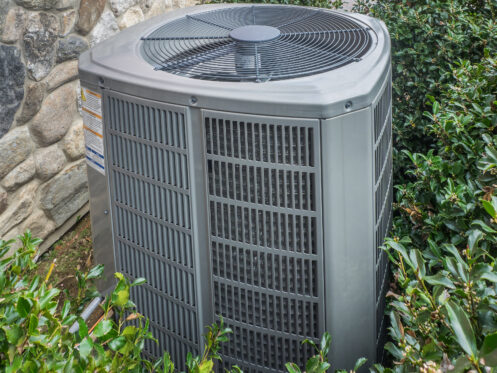
Having a central AC unit in Houston is your best bet because it is MUCH heavier and harder to steal than a small wall-mounted unit. Likely, one of your neighbors will see what’s going on and call the cops before the crooks can escape. However, there are extra precautions you can take:
By taking a few extra precautions, you can make certain that thieves will pass over your house to find an easier target.
We don’t deal in the security of air conditioners in Houston here at Air Depot. However, we CAN install a brand new unit or repair one that has been damaged through general wear-and-tear or an attempted robbery. Please call 281-477-3700 for more information.
Southern cities get a bad wrap for being the least sustainable — real “energy hogs” with AC pumping day and night, cars congesting the highways, and barely any water to go around. Right? A new article in The Atlantic Cities argues that a closer inspection reveals that southern cities may actually be more energy-friendly than the north.
Michael Sivak, a researcher at the University of Michigan, found that Minneapolis, Minnesota (the coldest metro) uses 3.5 times’ as much energy as Miami, Florida (the warmest metro). ”The main story is counter-intuitive to me as well because we hear all the time about how unsustainable it is to live in the desert,” Sivak says. “This doesn’t actually argue that that’s not the case. It just says look, there’s another side of the coin as well, and we should pay attention to the other extreme.”
Sivak didn’t look at the exact energy consumption of residents — but rather, he calculated the demand for heating and cooling based on the temperatures. The ideal indoor temperature should be about 70 degrees Fahrenheit, but Sivak used a more conservative estimate of 64 degrees since activities like running the shower and cooking dinner tend to heat the house as well.
“It takes more energy to heat a room by one degree than to cool it by the same amount,” said Sivak. “And the typical air conditioner is about four times more energy efficient than the typical furnace or boiler.”
He admits that one must look at water consumption, transportation patterns and air quality to come up with an accurate picture of sustainability — and that he failed to look at the amount of energy needed to power air conditioners electrically — but it does help dispel the myth that southern cities use up more energy simply based on the fact that it’s hot down here.
We often speak with customers who have had several estimates done on their existing HVAC with mixed results. One contractor might recommend replacing the AC unit only, while another may want to replace the furnace as well. Yet a third contractor might add that the duct-work needs replacing too. The homeowner wants to know: “Are some of these contractors taking me for a ride, or do I really need all this work done?”
The easy economical answer would be to replace the air conditioner only. However, that may not be the best answer in the long run. If you plan to stay in your home for 5 years or more, then a total upgrade makes sense. Naturally, you want to be as comfortable as possible while living in your home and save as much money as you can on your monthly bills. With all the financing plans available to consumers, it makes little sense to hold off.
If a contractor has recommended a full upgrade now, then it is only going to get worse the longer you wait. That being said, not every contractor is ethical, so it’s recommended that you hire an Energy Audit professional certified by BPI (Building Professional Institute) or RESNET (Residential Energy Services Network). The audit will tell you if your home has an air-tight seal, if you have enough insulation, and if you’ve been paying to cool all of Houston.
A good contractor will be able to determine if your existing ducts are sized properly for the furnace fan size, power and location. Many people find that old HVAC systems located in the basement have a hard time cooling second floor rooms. However, the newer high-efficiency systems can be located anywhere and will do an excellent job cooling the entire home.
Make sure the HVAC professional you use refers to manufacturer manuals to determine the proper sizing of the HVAC equipment for your home. We’ve seen many cases where AC units are much too large for the homes they were put into. For instance, you don’t need a four-ton AC unit for a 1,900 sq ft ranch home. A unit that is too large will cool the space quickly, but also leave excess moisture in the air. Damp homes breed mold and mildew.
It’s a good idea to get several free quotes before making a decision. If everyone says the same thing, then it’s obviously very easy to make the call and go with whoever seems most knowledgeable, professional and reasonable. If you hear conflicting stories, look for a third party energy auditor to advise you going forward. The average central AC unit in Houston lasts 10 to 15 years, so if you can’t remember the last time it was replaced, then it’s probably a good idea to upgrade your entire system.
1 2 3 4 5 6 7 8 9 10 11 12 13 14 15 16 17 18 19 Next »Phone: 281-477-3700
Fax: 281-477-3714
12920 Cypress North Houston Rd.
Cypress, Texas 77429